Can ChatGPT Write a Business Plan? Here’s Why You Not
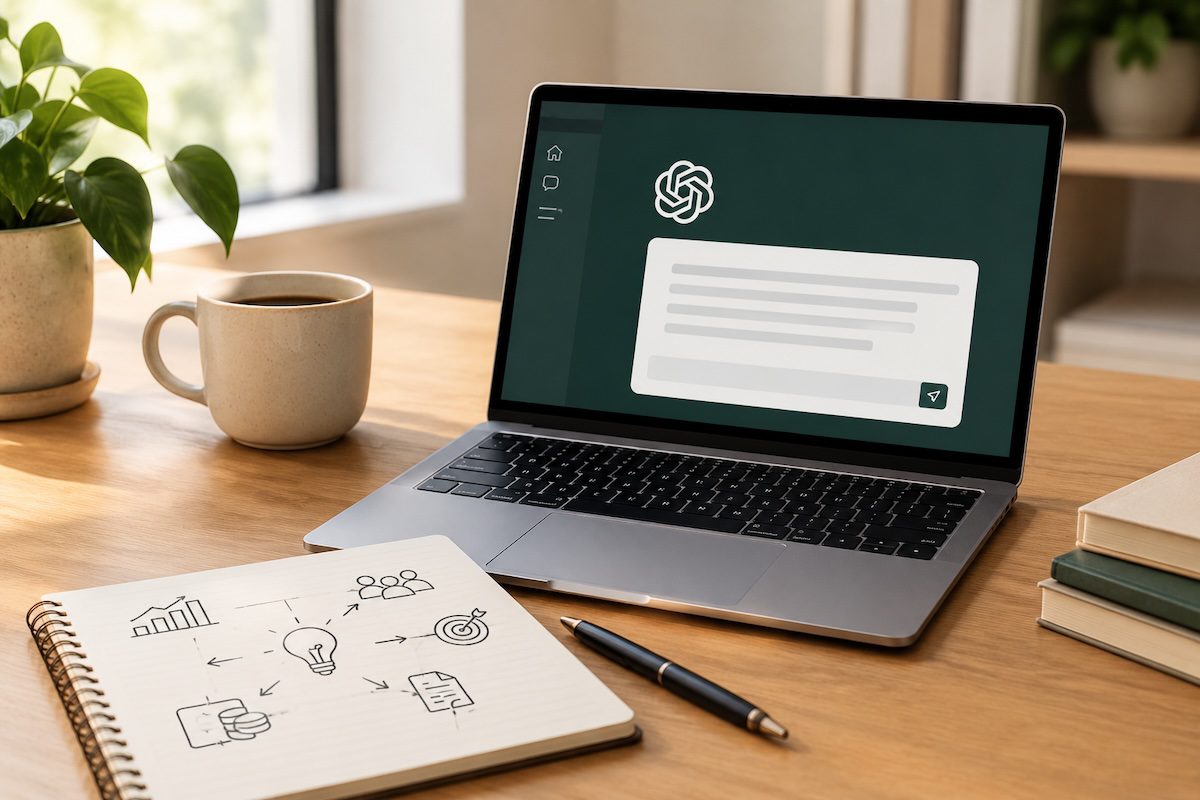
Can ChatGPT write a business plan? Yes. It can produce a full draft in a few minutes, complete with an executive summary, a market analysis, and a set of financial projections. The harder question is whether that draft will convince a bank, an investor, or a grant reviewer. In most cases, it won’t without a lot of work from you.
This guide shows you where ChatGPT helps and where it puts your plan at risk. You will also get a five-step framework and a set of prompts, so the final document reads like your business and holds up under review.
Key Takeaways
- ChatGPT can outline, draft, edit, and critique a business plan. It cannot supply facts about your business that you have not given it.
- It can invent market statistics and sources, so check each figure before a lender sees it.
- Its financial projections are only as good as the numbers you feed it, and lenders test those numbers.
- Paste confidential details with care. Canada’s privacy regulators advise using de-identified information in prompts where possible.
- Use ChatGPT as a drafting assistant and keep a person, either you or a professional writer, in charge of the final plan.
Can ChatGPT Write a Business Plan? The Short Answer
ChatGPT can write a business plan that follows the standard format. Ask for one and you will get the sections lenders expect. The U.S. Small Business Administration lists those core sections in its business plan guide: executive summary, company description, market analysis, organization and management, products or services, marketing and sales, funding request, and financial projections.
Structure is the easy part. A lender reads your plan to judge risk, and an investor reads it to judge growth. Both look for evidence about your company: your customers, your costs, your team, and your numbers.
ChatGPT has none of that unless you provide it. A plan written from a one-line prompt reads like a template with your company name dropped in. If you want to understand what each section needs before you start, our guide on how to write a business plan walks through them in order.
What ChatGPT Does Well in Business Planning
Used with care, ChatGPT saves time on the parts of planning that slow most founders down.
Building an Outline and Structure
Ask ChatGPT for an outline built around your industry and funding goal. A bakery seeking a bank loan needs a different emphasis than a software startup pitching angel investors. ChatGPT handles that adjustment well and gives you a checklist of sections before you write a word.
Brainstorming and Drafting Narrative Sections
The company description, mission statement, and marketing strategy rely on clear writing more than hard data. ChatGPT can turn rough notes into readable first drafts, suggest positioning angles, and list channels you may have missed.
If you need a full marketing plan as well, keep that work separate from the summary that goes in your business plan.
Editing, Summarizing, and Tightening Your Draft
Paste in a section you wrote and ask ChatGPT to cut it by a third, fix the grammar, or rewrite it for a non-expert reader. It can also condense a finished plan into an executive summary, which many founders find the hardest page to write.
Stress-Testing Your Plan Before Anyone Else Reads It
Ask ChatGPT to review your plan as a skeptical loan officer or investor would. It will point out vague claims, missing risks, and assumptions that need support. The exercise prepares you for the questions you will face in a funding meeting.
Where ChatGPT Falls Short
The same fluent writing that makes ChatGPT useful can hide problems until a reviewer finds them.
It Does Not Know Your Business
ChatGPT works from patterns in its training data and whatever you type into the chat. It does not know your supplier contracts, your pricing history, or why your first customers chose you. If you leave gaps, it fills them with plausible assumptions that may not match your situation.
Hallucinated Market Data and Statistics
Language models can produce figures, studies, and sources that look real and do not exist. A market size with no source, or with a source that leads nowhere, damages your credibility fast.
BDC tells founders to back up their conclusions with third-party research when they present a business plan. Treat each statistic from ChatGPT as a lead to check against an original source. Our guide to market research for a business plan shows you where to find data you can cite.
Weak Financial Projections
The SBA recommends five years of forecast income statements, balance sheets, and cash flow statements, with monthly or quarterly detail for the first year. ChatGPT can produce sample tables and simple spreadsheets.
The assumptions behind them still have to come from you, and a lender will test each one. BDC explains that banks look at cash flow and debt service coverage, and they stress-test the numbers. One example asks whether a hotel could still repay its loan if occupancy fell by 5%.
Generic Language Readers Recognize
Loan officers and investors read a lot of plans. Phrases like “a passionate team committed to excellence” or “a fast-growing market” tell them the writer had few specifics to offer. BDC’s advice on presenting a plan warns against vague ideas and overstated promises, and unedited AI drafts lean toward both.
Data Privacy and Confidentiality Risks
A business plan holds sensitive information: revenue, margins, client names, intellectual property, and sometimes personal financial details. In December 2023, Canada’s federal, provincial, and territorial privacy regulators published principles for generative AI. They advise organizations to enter personal or confidential information into prompts only where authorized, and to use de-identified information where possible.
Before you paste your financials, review the tool’s data settings and your company’s AI policy. Replace client names and exact figures with placeholders when the draft does not need them.
Section by Section: How Much Can ChatGPT Handle?
Your reliance on ChatGPT should change from one section to the next. Use this table as a guide.
| Business plan section | ChatGPT’s role | What you must supply |
| Executive summary | Strong, once the plan is finished | Final numbers, funding ask, key milestones |
| Company description | Strong | Your history, mission, and legal structure |
| Market analysis | Limited | Verified market data and original sources |
| Competitive analysis | Limited | Current competitor names, prices, and positioning |
| Products or services | Moderate | Features, pricing, and intellectual property |
| Marketing and sales | Moderate | Budget, channels you can afford, sales targets |
| Organization and management | Weak | Team bios, roles, and experience |
| Financial projections | Weak | Historical data, assumptions, and a working model |
| Funding request | Weak | Amount, use of funds, terms, and timeline |
What Lenders and Investors Expect From a Business Plan
Your audience decides how much scrutiny the plan gets. BDC draws a clear line between the two main readers. Lenders focus on risk and repayment, including revenue, expenses, and cash flow. Investors focus on growth potential, the exit, and their return.
Bank and Government-Backed Loan Applications
Banks look at your cash flow, debt levels, owner investment, management experience, and credit history.
Expect similar scrutiny whether you apply for a commercial bank loan, a BDC loan, or a loan under the Canada Small Business Financing Program. A lender who finds one invented statistic will start to question the rest of your plan.
Investor Pitches and Due Diligence
BDC notes that investors may give a pitch only a couple of minutes of attention, so your opening pages carry most of the weight.
Many will see your pitch deck before the plan itself. During due diligence, they check your figures against your records, and a plan that overstates traction will not survive that review.
Grant and Program Funding Applications
Grant reviewers score plans against published criteria. They look for alignment with the program’s goals, realistic budgets, and measurable outcomes.
A generic AI draft does not map to a funder’s scoring rubric on its own, so you will need to rewrite each section against the funder’s criteria.
The BRIEF Framework: How to Use ChatGPT to Write a Business Plan
BRIEF is the five-step process The Write Direction recommends to clients who want to draft with ChatGPT. It keeps the tool in the role of assistant and keeps you in charge of the content.
B: Brief ChatGPT With Your Real Facts
Start with a context prompt that describes your business. Cover what you sell, who buys it, where you operate, your stage, your funding goal, and who will read the plan.
Include the facts that set you apart, such as a signed contract, a patent, or your first year’s sales. The more specific your brief, the less ChatGPT has to guess.
R: Request One Section at a Time
Ask for one section per prompt and set rules for length, tone, and format. Section-by-section prompts give you tighter drafts and make errors easier to spot than a single request for a full plan.
I: Inspect Each Claim and Source
Check each statistic, competitor detail, regulation, and source against an original document. Delete any figure you cannot trace. If you ask ChatGPT where a claim came from, confirm the answer yourself, since it can cite sources that do not exist.
E: Enter Your Own Financial Numbers
Build your projections from your own records, supplier quotes, and assumptions, in a spreadsheet your accountant can review.
Use ChatGPT to explain the statements, draft the narrative around them, or look for gaps in your assumptions. Then make sure the numbers in your text match the numbers in your tables.
F: Finish in Your Own Voice
Read the full draft aloud. Replace generic phrases with your own examples, customer stories, and results. You will meet the lender or investor in person, and the plan should sound like the founder across the table.
Sample ChatGPT Prompts for Each Business Plan Section
Adapt these prompts with your own details, and replace the bracketed text before you send them.
- Outline: “Create a business plan outline for a [business type] in [city] applying for a [loan type or investor round]. Flag the sections a lender will review in the most detail.”
- Company description: “Using these notes, write a 200-word company description for a bank loan officer: [paste notes].”
- Market analysis: “List the data points I need for a market analysis of [industry] in [region], and suggest public sources where I can find each one.”
- Competitive analysis: “Turn this competitor research into a table covering price, target customer, and main strength: [paste research].”
- Marketing and sales: “Suggest low-cost customer acquisition channels for a [business type] with a monthly budget of [amount], and explain the trade-offs of each.”
- Financial narrative: “Explain these projections in plain language for a lender, and list the assumptions a bank is most likely to question: [paste summary].”
- Executive summary: “Write a one-page executive summary using only the information in the plan below. Do not add facts that are not in the plan.”
- Review: “Act as a skeptical commercial loan officer. List the ten weakest points in this business plan and the evidence that would fix each one.”
The market analysis prompt asks ChatGPT where to find data, which keeps invented statistics out of your plan.
ChatGPT vs Business Plan Software vs a Professional Writer
Each option fits a different budget and level of risk.
| Factor | ChatGPT | Business plan software | Professional writer |
| Cost | Free or a low monthly fee | Monthly subscription | Project fee |
| Speed | Minutes for a first draft | Hours to days | One to a few weeks |
| Accuracy | Depends on your inputs and fact-checking | Depends on your inputs | Researched and verified |
| Financial modelling | Sample tables and simple spreadsheets | Built-in forecasting templates | Custom model or review with your accountant |
| Lender readiness | Needs heavy editing | Good structure, generic text | Written for the specific funder |
| Customization | Limited to what you provide | Template-based | Built around your business |
Many founders combine the options. You might draft with ChatGPT, build the numbers in a forecasting tool, and hire a writer to turn both into a plan your funder will trust.
When to Hire a Professional Business Plan Writer
A professional writer makes sense when the stakes or the complexity go up. Consider hiring help if:
- You are applying for a loan, investment, or grant worth more than you can afford to lose.
- Your lender or funding program sets a required format or scoring criteria.
- You need the plan in both English and French.
- Your ChatGPT draft reads as generic and you lack the time to rewrite it.
- You need market research and projections you can defend in a meeting.
The Write Direction’s writers interview you, research your market, and write each section for the reader who will fund you. Our business plan writing services cover startups, expansions, and lender-ready plans across Canada and the United States.
Frequently Asked Questions
Is it okay to use ChatGPT to write a business plan?
Yes, as long as you treat it as a drafting tool. ChatGPT speeds up outlines, first drafts, and edits. You remain responsible for the accuracy of each fact, figure, and promise in the plan.
Lenders and investors judge the content, so check the market data, build your own financial projections, and rewrite generic sections with details about your business before you submit it.
Can ChatGPT create financial projections for a business plan?
It can produce sample income statements, cash flow tables, and simple spreadsheets from the assumptions you give it. It does not know your real costs, pricing, or sales history.
The SBA recommends five years of projected statements for funding requests, with monthly or quarterly detail in year one. Build those numbers from your own records, have an accountant review them, and use ChatGPT to explain them in plain language.
Can lenders or investors tell if ChatGPT wrote a business plan?
Often, yes. AI drafts tend to use generic phrases, broad market claims, and polished language with few specifics.
Experienced loan officers and investors read many plans and notice when a document could describe any company in the industry. Credibility matters more than detection. A plan full of unsupported claims fails review whoever wrote it, so add your own data, examples, and sources.
Is it safe to share confidential business details with ChatGPT?
Share with caution. Canada’s privacy regulators advise organizations to enter personal or confidential information into generative AI prompts only where authorized, and to use de-identified information where possible.
Review the tool’s data settings and your company’s AI policy first. Replace client names, account numbers, and exact figures with placeholders when the draft does not need them. You can test a section with dummy numbers first and add the real figures offline.
Can ChatGPT write a business plan for a bank loan?
It can write a draft, and that draft will not secure funding on its own. Banks assess cash flow, debt, owner investment, management experience, and credit history.
You need real financial statements, realistic projections, and a clear funding request covering the amount, use of funds, and terms. So, can ChatGPT write a business plan a bank will approve? Only with your data and your review behind it.
Get a Business Plan That Holds Up to Scrutiny
ChatGPT can give you a fast first draft, a solid outline, and a tough critic. It cannot give your plan the facts, numbers, and voice that convince a lender or investor. Use the BRIEF framework to keep the tool in its place, verify each claim, and build your financials from real records.
At The Write Direction, we help founders and established businesses across Canada and the United States turn rough drafts, including AI-generated ones, into business plans ready for funders.
Our writers research your market, work with your numbers, and write each section for the reader who decides on your funding. Book a consultation or email us at [email protected] to get started.

Related posts

Recent Posts